Sunday, September 27, 2015

Will your brand survive the online barrage?


Have online comments and reviews become the new word-of-mouth?  Businesses have to be conscious of what’s being said about their brand online, both good and bad. According to a Forbes.com article, online reputation issues can arise quickly and take management by surprise.  The question comes up about “what can I do?” about my online reputation.  Many people use the internet as a soap box, so much of what is said is easy to dismiss.  Part of the battle is trying to cut through the clutter to the real issues people are saying about your brand.

The biggest surprise organizations don’t realize is the potential for loss of business because of negative comments.

For example, a company I know, which shall remain nameless, experienced a tough time because a negative story came out and was placed online.  For nearly a year the company’s negative story made it online. Even after the company was cleared of any wrongdoing, the online reputation of the company was tarnished.

The company relied on being awarded contract work and when it submitted proposals for work, one of the first things potential customers did was search the company on Google. The company lost out on over an estimated $1 million in business because of their online reputation.

To fix their online reputation it took nearly a year of a combination of social media, blogging, positive news and Google changing its algorithm before the company saw the online reputation begin to change. Yes, negative online reputation is real and is something to be concerned with as a business owner.

While this was an example of the negative of online reputation management, having no presence is just as bad.

If you own a restaurant, or any business really, you know about website like Yelp.com, Google Reviews, Zagat, and even the YP.com (Yellow Pages). Reviews can make or break your business.

According to a BusinessInsider.com article not having a brand online is just as atrocious. Through reviews, articles, etc., having a brand for yourself of your business is a must to be found. 

I know when I go to the store and I am unsure about a product, I will scan the barcode, if it’s available, and read reviews. Many times, that will influence whether I purchase the product or not. The same applies to restaurants. My wife and I will often check reviews of a eatery before trying something new. Usually though, we’ll give the place a try even if it’s had a few negative reviews. You have to take into account reviewers that are just online to make a stink versus the real ones.

As a business owner, encouraging patrons to review your services is important to build your brand and positive online reputation. This can be done by simply asking after every purchase. I’ve seen businesses offer a chance to win gift cards or free services if they review your business.

Facebook has incorporated reviews on business pages and is one more channel to monitor. Your business Facebook page will now show a star rating of 1 to 5, depending on positive versus negative reviews. Encourage and monitor should be the mantra for your organization. Many of the review websites are indexed by Google and show up on the first page of Google results.  And when 93 percent of all online experiences begin with a search, according to the Search Engine Journal, its difficult to ignore the value of where you stand in your SERP (search engine results page). 

So how do you reach your audience to build your brand online. Well, according to a research study published in the Journal of Advertising Research, an ads click-through rate, a website’s unique visitors and ad impressions were often mentioned the most by professional media managers.

Building your brand online means having a clear concise message delivered to all target audiences. Utilizing digital advertising, an organization can deliver a specific message to a particular audience based upon their purchase or online behavior.

Behavioral advertising is one way to deliver your message based upon the behavior of a user. For example, let’s say you recently made a purchase of a case or charger for your android phone. You may begin to see online ads for more phone cases, maybe an ad for a new phone. You could see an ad for an iPhone because Apple knows you have an Android phone and they want you to switch. The messaging from Apple could relate to your ownership of a Android phone. Their message could be they have an app that helps transfer all your saved picture, apps, and more to your new iPhone.

This is one example of building your brand and using the digital expanse to reach your audience.

Your brand is only as strong as your product. This is one area that is often overlooked by organizations. Owners want to develop a new snazzy communication and marketing initiative to reach customers. However, no matter how much you scream from the mountaintops, if you do not have a strong product, then your branding means nothing.

Company leadership must recognize that branding should start internally. To some, this way of thinking may not seem in-line with their approach. I think to have a successful brand you MUST have a strong product and/or service. Your biggest brand ambassadors include your employees. To neglect them would be a disservice to your business. Bring them into the brand process. Train them into brand evangelists. Let them communicate your brand for you. Again, perfect your product, or at the very least, listen to your customers and make strides to improve.


Your brand and online reputation go hand-in-hand. Monitor your reputation before it’s too late. Create a comprehensive communications and marketing plan to build or maintain your brand. After all, it’s part of the lifeblood of your organization.

Sunday, September 13, 2015

Blogs as a tool for strategic communicators


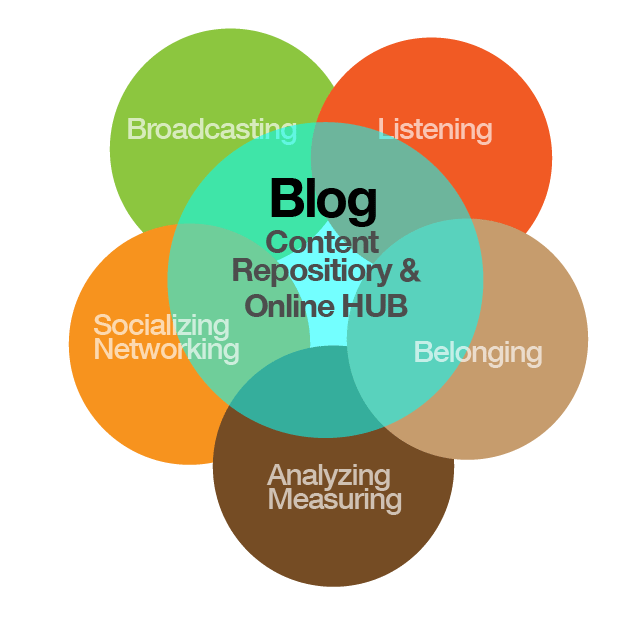
Since the late 90’s, blogs have grown from about 50 in 1999 to over 2 million in 2003, according to a 2005 article by Barbara Kaye in the Atlantic Journal of Communication. Blogs are a repository for everything from opinion pieces, to watchdog groups, to citizen journalists. With the help of accessible technology, just about anyone can start a blog in a matter of minutes and share their thoughts with the world. According to Kaye, journalists are critical of bloggers and vice versa. Although, she goes on to identify why journalist three motivations to use blogs; community, convenience and information seeking. So how as a professional strategic communicator can you add this tool to your mix? Let’s discuss.

As a strategic communicator, your job can be described in about one sentence; communicate the message(s) of your client or organization in a concise, professional manner to the benefit of both your stakeholders and organization. While my definition is contained to about one sentence, it is much more complicated than that.  As a professional communicator we use tools such as news releases to disseminate information so media outlets can share that with our audience. We use letters (I know, who really uses snail mail anymore, but it is still effective. I mean come on, who doesn’t enjoy receiving a letter from someone you were not expecting to get.) directly to stakeholders, newsletters, emails, social media, articles, video and more.

A blog can be your most powerful tool to communicate your message. Why? Because you have direct control over it’s content. A study from Arizona State University’s Walter Cronkite School of Journalism and Communication noted that blogs tend to be less credible because of the lack of sources in a story and lack of varied viewpoints. This is a challenge for your blog.  Let’s take a look at an organization that has used a blog successfully.

CPS Energy, which is the City of San Antonio’s municipal energy company, began to operate a blog through their website several years ago. The goal was the organization wanted a location where its over 1 million customer could access for information about the company, stories, outage questions and general energy saving tips. Tired or relying on traditional media to get its message out, the energy company began posting to its own blog, http://newsroom.cpsenergy.com/blog/. The organization posts multiple times per week. Looking at the last two weeks worth of blog posts, there are feature posts about employees to humanize workers, how the company helps low-income families, updates on initiatives, and how the company is handling high demand during peak times during the summer.

Additionally, the blog is a resource for media outlets. CPS Energy included a ‘newsroom’ with an archive of current and past news releases. There is even a way to request logo usage, images, video and more.  CPS Energy has found a way to communicate their message with customers, listen and reply to feedback all without going through traditional media outlets. The blog was so successful that it has won communication accolades over the years for its success in communicating with stakeholders.

Using the CPS Energy model, your company’s blog can become a primary source of information to help support Kaye’s reasons why journalist use blogs; community, convenience and information seeking.

So how can you help create your blog to be a resource for your customers?

First, create a plan. Decide the goal of your blog; communicate with customers, share critical information, be a destination for media outlets. It’s very helpful to create an editorial/content calendar for your blog.  This will help alleviate having to think about what to write every week. Mix in important messages with feature-type content. In your articles, be sure to include quotes from the proper staff to support each topic. I would even suggest going outside of your organization for quotes. This will show your audience that your blog is seeking additional sources to shape and support your story. Again, this leads back to the more sources you have the more credible your information is perceived.

Through social media and other communication outlets, share with customers your new resource of information. Be sure it’s mobile friendly, as that will encourage stakeholders to come back if it’s formatted correctly.

If crisis situations emerge, your blog is a great tool to share information with your customers and media. When time is crucial, the only limitation your blog has is how quickly you can hit the ‘submit’ button. With that said, your blog is filtered by traditional gatekeepers who have limited time, column inches and possibly an agenda.

Each blog post has the opportunity for comment and I would encourage you to open that option on your blog and engage with your customers. This gives your audience a voice. What’s key is that you should engage with your audience and let them know your organization is listening.

A blog for your business is a great way to communicate your message to your audience. Incorporate a blog into your strategic communication mix, and if managed correctly, could be your one of your highest trafficked page on your website. If you can create your blog so that a journalist sees it as a resource, a location for story ideas, you’ve done your job. If you can accomplish this challenging task, then your job as a strategic communicator has become a little easier.


Sunday, September 6, 2015

Social media as an agent of change

Social media has altered the way we communicate with each other and how organizations communicate with its stakeholders. Today, with 71% of U.S. adults on Facebook alone, it’s quite clear that the population has adopted its use and integrated it into their everyday lives. 

I remember the days, not that I’m that old, when most companies said the words social media it was usually followed by sigh of reluctance. In the professional communication world we have gone from saying social media is “non-traditional” communication to “traditional.” Meaning that what was once considered a marketing communication tool on the fringe for a business to now it is a ‘must-have’ in your external communication efforts. 

To me, what I’ve find most compelling is how social media has influenced just about every facet of our lives, especially traditional news media. It seems like you cannot go a week without a news report that includes a social media reference. A compelling personal story that has gone viral to the point where large outlets like NBC News covers the story. Maybe it’s a story about suppression of a culture, or as we’ve seen lately, the distrust in law enforcement. Regardless, social media has changed the immediacy of news and 

Just this weekend, a San Antonio high school football team was playing a game and with only minutes left in the game, a football player supposedly targeted a referee on the field and tackled him during a play. As the referee hit the ground, another player for the same team came and hit him on the ground, further injuring the referee. Video of the event was captured by spectators and was posted on YouTube (now with nearly 800,000 views at the time of this posting) to be shared around the world. 

Within 12 hours the video had gone viral with local news covering the story, requests from CBS Sports and ABC News to re-air the video on all their platforms. The video was captured using a cell-phone, but looks as though it was recorded from a TV, that part is still not clear.. State football officials are now in the mix, the referee wants to press charges against the football players and certain folks are asking the players never step foot on a football field again. Bleacher Report, a digital-native sports news website, ESPN and other national news outlets are picking up on the story. 

I mention the story because all of this I just described above took place through social media. My wife discovered the story on Facebook. I’ve followed the story since Sunday morning on Twitter. The UIL, a sports governing body in Texas, took to Twitter Sunday afternoon to officially release their statement on the situation. If you look at the video poster’s comments section on the video, you can see requests from media outlets asking permission to show his video throughout their news products. While the story is still developing, this is the power of social media and I’m sure will lead to a change in procedure or policy to deter future incidents

Again in San Antonio just this past week, a man was shot and killed while he was allegedly surrendering to a county sheriff.  What makes the story compelling is the fact that the person’s next door neighbor saw the commotion and captured the event via his cell phone camera. A local TV station wanted the video exclusively for their station and ended up paying the neighbor $100 for the rights to the video. Though the video was at a specific angle and could not tell the whole story, the station ran it anyway, which showed the man with both hands up as the sheriff shot him. The station only showed a portion of the video during their newscast, but posted the unedited version on their website. The public’s reaction online was swift and loud. To the point that Public Information Officer for the sheriff’s office put out a statement on their Facebook page denouncing the TV station for posting the video and directing the public to call the TV station in outrage of showing a man being shot. Then a war of words began on Facebook between the TV station and the sheriff’s office. 

The story has exploded, especially with the current state of distrust with law enforcement nation wide. Within several days of the story posted online, the video and article have been shared 50,000 times on Facebook and over 2,000 times on Twitter. Again, the story is still developing, but I’m sure it will lead to a change in procedures with as much ruckus that is being made in the court of public opinion. 

I share all of these examples as evidence that social media is an agent of change. With millennials and other generations using social media as their news sources, it is providing a new way to communicate and gives every day people a voice and the power to bring about change.  

From more of a theoretical approach, there are a lot of communication theories out in the academic world, many talk about the media’s influence on the public. I wonder when someone will create a communication model that takes into account social media as the influencer of news media. In a social media world, the general public has the power, and frankly, the responsibility to use social media to change views about specific issues.  


References:
http://www.pewinternet.org/2015/01/09/social-media-update-2014/   
http://dc.library.okstate.edu/utils/getfile/collection/Dissert/id/73777/filename/74468.pdf  
http://www.youtube.com/watch?v=RNCrs63JeuM&sns=em   
http://www.ksat.com/news/ksatcom-exclusive-unedited-video-of-fatal-deputy-involved-shooting 
http://www.journalism.org/2015/06/01/millennials-political-news/ 
http://www.danah.org/papers/2010/BSTS-TwitterPolarization.pdf